
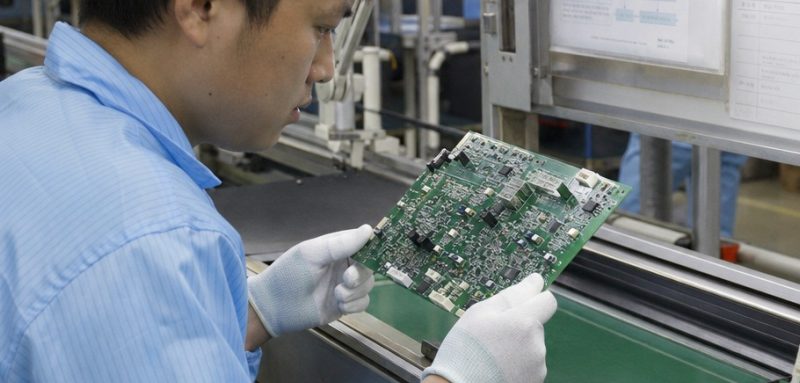
When quality problems show up late, PCB sourcing becomes expensive fast. A board that fails at assembly — or worse, in the field — costs far more than the difference between two quotes.
The problem is that “top PCB manufacturer” lists rarely tell you what actually matters for your build. They list capabilities and certifications, but not whether the supplier can review your files, catch manufacturability risks, source components reliably, and deliver boards that work the first time.
Greenspcba Technology helps engineering teams, OEM buyers, startups, and growing electronics manufacturers move from design files to reliable PCB fabrication, component sourcing, PCB assembly, inspection, and delivery through an end-to-end PCBA workflow.
This guide explains how to compare custom PCB manufacturers , what to ask before quoting, and why a coordinated manufacturing partner reduces risk before production begins.
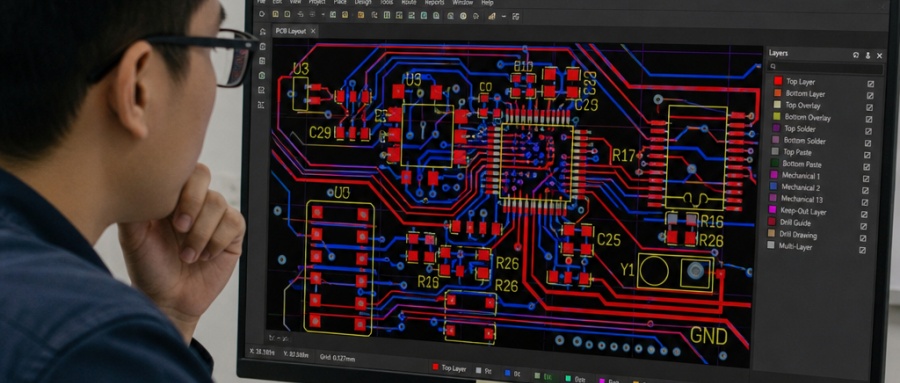
Which PCB Manufacturer Is Right for Your Build?
The right PCB manufacturer is the one that can build your actual board reliably — not the one with the lowest quote or the longest capability list.
For simple prototypes, speed and clear communication may matter most. For complex multilayer boards, tight tolerances, dense component placement, mixed SMT and through-hole assembly, or controlled materials, you need something different: a partner that reviews design files carefully, explains manufacturability risks, and supports fabrication and assembly as one connected process.
That is why many buyers search for the best PCB manufacturers for complex boards rather than a generic board house. A supplier should understand your stack-up, component availability, assembly process, inspection requirements, and testing expectations before confirming production.
A Smarter Way to Compare PCB Manufacturing Services
A useful shortlist starts with your product requirements. Instead of asking “Who is the best?” in the abstract, define four things:
- What your board must survive
- How it will be assembled
- What volumes you expect
- What documentation your team or end customer requires
This turns PCB sourcing from guesswork into a repeatable evaluation.
Use this checklist when comparing custom PCB manufacturers for 2025–2026:
| What to check | Why it matters |
|---|---|
| Board complexity | Layer count, trace and space, impedance, via structures, copper weight, materials |
| Assembly scope | SMT, through-hole, mixed technology, BGA, cable or mechanical integration |
| Engineering support | DFM review, BOM checks, stack-up advice, panelization guidance |
| Supply chain handling | Component procurement, approved alternates, shortage communication |
| Quality process | Incoming material checks, in-process inspection, final inspection, test requirements |
| Communication | Quote clarity, response time, engineering notes, change control |
Standards such as IPC-A-600 and IPC-6012 are widely used references for printed board acceptability and qualification. IPC certification programs cover workmanship and inspection standards relevant to PCB and assembly quality.
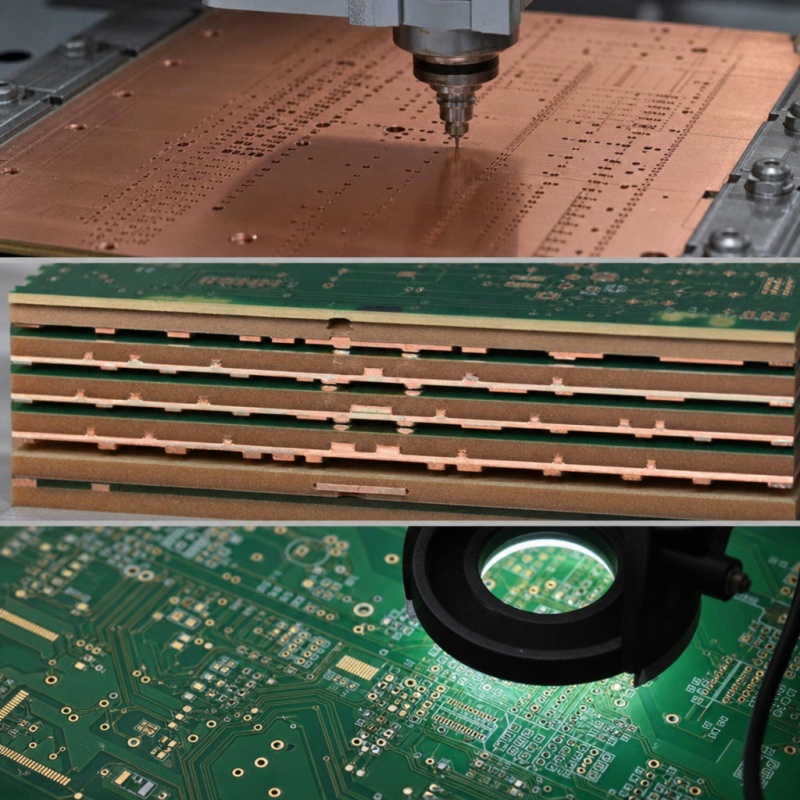
Built for Prototypes, Pilots, and Production Planning
A strong PCB manufacturing partner should help you learn quickly during early builds and protect repeatability as the product matures.
Prototype runs often reveal issues that are not obvious in CAD:
- Component spacing that slows assembly
- Part substitutions that affect fit
- Soldering risks
- Documentation gaps that delay approval
When your manufacturer provides DFM review before production, you can correct many of these issues before boards are built.
A full turnkey approach is useful when your team wants one coordinated workflow rather than separate vendors for fabrication, component procurement, and assembly. The practical benefit is fewer handoffs. Your BOM, Gerber files, pick-and-place data, assembly notes, and testing expectations can be reviewed together — which helps reduce confusion between the bare board and assembled product stages.
Support for Complex Multilayer Boards and Tight Tolerances
The best PCB manufacturers for complex multilayer boards with tight tolerances do more than accept advanced files. They look for risks before production:
- Insufficient annular ring
- Tight component courtyard spacing
- Thermal imbalance
- Unclear impedance notes
- Inconsistent drill tables
- A stack-up that does not match the board’s electrical and mechanical needs
That review can be the difference between a smooth build and a costly respin.
For complex boards, ask your supplier to confirm these items before you approve a quote:
- Manufacturing limits: minimum trace and spacing, drill sizes, via options, copper thickness, solder mask registration, controlled impedance support
- Stack-up alignment: dielectric materials, layer sequence, copper balance, signal and power needs
- Assembly feasibility: component orientation, polarity markings, fine-pitch placement, thermal pads, reflow constraints, rework access
- Inspection plan: AOI, visual inspection, X-ray for hidden joints, electrical testing, functional testing
- Revision control: file version tracking, engineering change handling, approval points before fabrication and assembly
This is where coordinated PCB manufacturing services become valuable. A manufacturer that sees both the board and assembly requirements can flag issues earlier than a supplier handling only one stage.
Services That Simplify Your Supply Chain
When PCB sourcing is split across too many vendors, small details fall through the gaps.
One team quotes the bare board. Another sources components. Another assembles. Your engineers spend valuable time reconciling questions from each side.
A full turnkey PCBA partner reduces that friction by coordinating the manufacturing path around a single build package. A turnkey partner can support teams that need:
- Custom PCB fabrication for prototypes and production-ready builds
- PCB assembly for surface-mount, through-hole, or mixed designs
- Component procurement to match the BOM with available, buildable parts
- DFM feedback before production so design risks are addressed earlier
- Quality assurance throughout the build, not only at final shipment
- Quick-turn support when the project needs fast iteration and clear feedback
This structure is especially helpful for small electronics manufacturers that use internal design tools but need manufacturing guidance. Even if your team uses what it considers the best PCB design software for small electronics manufacturers, the output still needs to be reviewed for real-world fabrication, assembly, sourcing, and inspection conditions.
Practical Fit for Growing Electronics Teams
A coordinated manufacturing partner is a good fit when your product team needs manufacturing support without building a large internal sourcing operation.
That may include:
- Industrial controls
- Communications devices
- Medical electronics
- Smart hardware
- Energy systems
- Automotive electronics
- Test instruments
- Consumer electronics
- Connected devices
The common need is not the industry label. It is the requirement for consistent PCB and PCBA execution.
Consider a typical scenario. Your engineering team has a working prototype. But the BOM includes several parts with uncertain availability, the board has dense routing, and the assembly notes are incomplete.
A low-touch supplier may simply quote the files and wait for problems to appear later. A stronger partner will review the design package, point out unclear requirements, confirm sourcing assumptions, and help you prepare a cleaner build package before production begins.
What to Send for a Faster, Clearer Quote
The quality of your quote depends heavily on the quality of your documentation. Clear files help the manufacturer assess feasibility, cost drivers, lead-time risks, and inspection needs. They also reduce back-and-forth — which matters when you are comparing custom PCB manufacturers under a deadline.
Prepare these items before requesting an inquiry:
- Gerber files or manufacturing output from your PCB CAD tool
- Drill files, board outline, layer stack-up, and impedance notes if required
- BOM with manufacturer part numbers, quantities, approved alternates, and sourcing preferences
- Pick-and-place file, polarity notes, assembly drawings, and special placement instructions
- Testing requirements, programming needs, inspection expectations, and packaging instructions
- Target quantity, expected schedule, and whether the build is prototype, pilot, or production
If some details are not ready, say so early. A capable manufacturer can often explain what is missing and help you avoid assumptions that would otherwise create delays.
Quality Signals Worth Asking About
Quality is not a slogan. It is a sequence of checks before, during, and after the build.
When you compare the best PCB manufacturers, ask how the supplier:
- Controls incoming materials
- Verifies files
- Inspects fabrication output
- Manages assembly defects
- Documents final results
Certifications and standards are useful signals, but they should be paired with project-specific inspection and communication.
Strong quality conversations often include:
- How DFM findings are reported and approved
- What inspections are used for bare boards and assembled PCBAs
- How component substitutions are proposed and documented
- Whether test requirements are defined before assembly starts
- How nonconforming items are identified, handled, and communicated
- How repeat orders preserve the approved revision and process notes
IPC’s supplier selection guidance highlights the value of audits, manufacturing process review, and standards such as IPC-6012 and IPC-6013 when qualifying PCB suppliers.
Start Your PCB Manufacturing Inquiry
If you need a reliable partner for custom PCB manufacturing, PCBA assembly, component sourcing, or full turnkey production support, Greens PCBA is ready to review your project requirements.
Send your files, quantity target, and build expectations. Ask for a manufacturability review along with your quote.
A good inquiry does more than request a price. It starts a technical conversation about how to build your boards correctly, consistently, and with fewer avoidable surprises.
For teams comparing the best PCB manufacturers, that conversation is often the most important step.
Recent Comments