
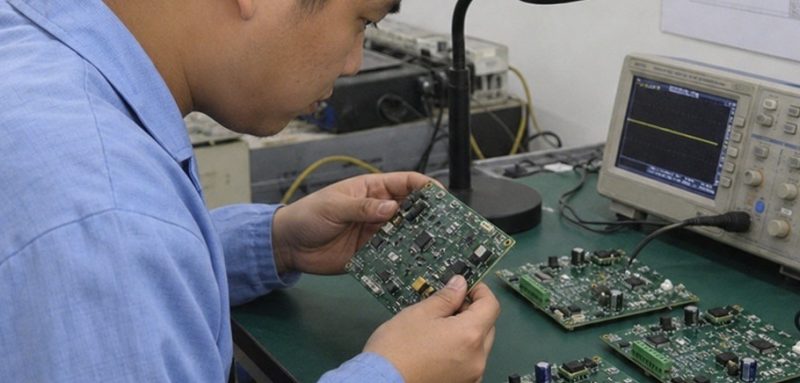
Turning a circuit design into a working assembled board shouldn’t slow down your product timeline. But in practice, that’s exactly what happens when fabrication, component sourcing, assembly, and inspection are handled by different vendors with no coordination. Every handoff adds a delay. Every unclear substitution adds a question. Every assembly defect resets the learning cycle.
A PCBA prototype assembly service is built to remove that friction. It’s designed for engineering teams, hardware startups, OEMs, and product developers who need reliable PCB assembly for validation, testing, demos, and early production planning. From sourcing support to SMT assembly, inspection, and delivery-ready builds, the goal is simple: help you move from files to functional prototypes with speed, clarity, and accountability.
This guide explains what a prototype assembly service includes, how the process works, what advanced assembly capabilities matter, and what to prepare before requesting a quote.
What Do You Get with a PCBA Prototype Assembly Service?
You get a practical path from bare circuit board design to a populated, test-ready assembly. Instead of coordinating PCB fabrication, component sourcing, surface mount placement, through-hole work, inspection, and packaging separately, a prototype assembly workflow brings those steps into one controlled process.
That matters most when you are still validating your design. Every delay, unclear substitution, or assembly defect can slow the learning cycle — and when you’re trying to get feedback from a prototype run, time is the most valuable thing you have.
A strong prototype manufacturing partner helps you prepare production files, confirm assembly requirements, and identify issues before boards enter the line. The result is not just a custom PCBA. It’s a build that gives your team useful feedback on fit, function, manufacturability, and next-step readiness.
Typical support may include:
- PCB fabrication coordination for prototype quantities and early-stage revisions
- SMT assembly for compact, high-density surface mount designs
- Through-hole and mixed-technology assembly when connectors, switches, headers, or larger components are required
- Component sourcing support based on your BOM and approved alternates
- DFM and assembly file review to catch common production risks before assembly begins
- Inspection and quality checks to verify placement, polarity, solder quality, and build consistency
- Quick-turn assembly options for teams working against tight testing, demo, or launch milestones
PCB Assembly Built for Speed and Accountability
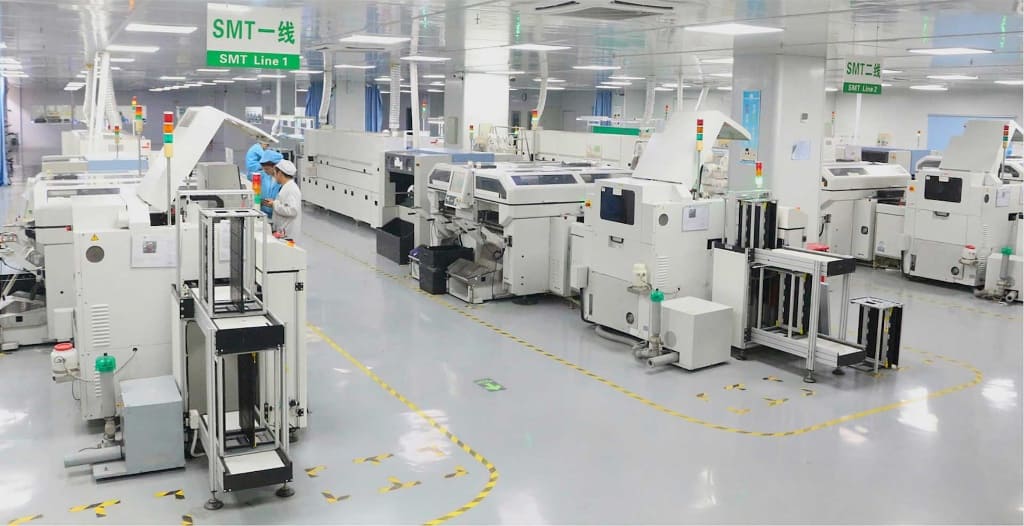
Rapid prototyping only works when the process is fast and controlled. A quick build that leaves your team guessing about file status, component availability, or inspection results can create more risk than it solves. Speed and accountability mean the work is organized around clear inputs, visible decisions, and practical communication throughout the build.
Speed starts with complete documentation. Gerber files, BOM, pick-and-place data, assembly drawings, polarity notes, and any testing requirements all help prevent avoidable questions once the job enters production. Accountability comes from confirming what will be built, how substitutions will be handled, and what inspection steps are expected before boards ship.
This approach is especially useful when your team is preparing for:
- Engineering validation builds before firmware or enclosure testing
- Investor, customer, or trade show demonstration units
- Design revisions after a first prototype run
- Low-volume pilot builds before committing to larger production
- Functional samples for internal review or certification planning
- Proof-of-concept electronics that need professional assembly rather than hand-built boards
When timelines are tight, the best process is not rushed. It is disciplined. Each step should reduce ambiguity so your team can focus on testing the product instead of chasing assembly details.
A Practical PCB Assembly Process from Files to Finished Boards
A dependable PCB assembly process begins before any components are placed. The first step is reviewing the design package to make sure the manufacturing and assembly data match the intended build. This includes checking footprints, reference designators, quantities, component orientation, board finish requirements, and any special assembly notes that could affect yield or performance.
Once the files are reviewed, the build moves through fabrication and component preparation. For surface mount designs, solder paste is applied, components are placed, and boards are reflowed under controlled conditions. For mixed builds, through-hole components may be added after SMT placement, followed by soldering, cleaning when applicable, and inspection.
A typical workflow looks like this:
- Submit your project files — Gerbers, BOM, centroid data, and assembly notes.
- Confirm build requirements — quantity, lead time, component preferences, and inspection expectations.
- Review manufacturability — especially for fine-pitch parts, dense layouts, polarity-sensitive components, or unusual packages.
- Fabricate and prepare materials — so boards and components are ready for assembly.
- Assemble the PCBAs — using SMT, through-hole, or mixed assembly methods.
- Inspect the finished assemblies — for placement accuracy, solder quality, orientation, and visible defects.
- Package and deliver — so your team can begin testing, programming, integration, or customer evaluation.
This process makes prototype manufacturing more predictable. It also gives your engineering team a repeatable foundation for future revisions, because each build creates information that can improve the next one.
Advanced Assembly Processes for Demanding Prototypes
Modern electronics often require more than basic placement and soldering. Fine-pitch ICs, small passive components, double-sided SMT layouts, BGAs, RF sections, dense connectors, and mixed-technology designs can all increase assembly complexity. Advanced assembly processes help support these requirements while keeping the prototype build aligned with real manufacturing constraints.
The right assembly services should handle practical prototype challenges — limited component availability, multiple design revisions, unusual package types, and boards that need both machine placement and careful manual work.
For example, a compact IoT device may require tiny SMT components on both sides of the board, while an industrial controller may need robust terminal blocks, relays, and through-hole connectors. Both are PCBAs, but each one needs a different assembly plan.
Useful assembly capabilities may include:
- Fine-pitch SMT component placement
- Double-sided SMT assembly
- Mixed SMT and through-hole assembly
- BGA or QFN package handling where supported by project requirements
- Manual assembly for connectors, hardware, or specialized components
- Visual inspection and process checks during key build stages
- Prototype-to-pilot continuity for designs moving toward low-volume production
These capabilities matter because a prototype is not only a sample. It is a test of whether your design can be built efficiently and consistently. A well-managed build can reveal layout improvements, sourcing concerns, and assembly constraints before they become expensive production problems.
PCB vs PCBA Prototype Work: What’s the Difference?
The difference between PCB and PCBA prototype work is simple but important.
A PCB is the bare printed circuit board: the substrate, copper traces, pads, vias, mask, and silkscreen that create the electrical foundation.
A PCBA is the assembled board after components have been mounted and soldered, making it ready for testing, programming, or integration into a product.
This distinction matters when requesting quotes or planning a schedule. If you only need bare boards, the job is PCB manufacturing. If you need a functional prototype with components installed, you need PCB manufacturing and assembly services or a dedicated PCBA prototype assembly workflow.
The second path requires more information because the assembly partner must understand the BOM, component placement, soldering requirements, inspection needs, and any project-specific handling instructions.
A clear request helps avoid mismatched expectations. If your team needs working boards for firmware testing next week, asking only for PCBs will not get you there. If you need a complete assembled prototype, provide the full assembly package from the start so the team can plan the build accurately.
Built for Engineers, Startups, and Product Teams
A prototype assembly project often begins with urgency. Maybe your firmware team is waiting on hardware. Maybe a customer review is scheduled. Maybe your first hand-soldered sample worked, but now you need a cleaner, repeatable build to confirm the design.
In each case, professional electronic assembly turns your design data into boards your team can evaluate with more confidence.
This service is well suited for:
- Hardware startups preparing proof-of-concept units or investor demos
- Engineering teams validating new board revisions before production release
- OEMs developing custom PCBA designs for new or updated products
- R&D departments testing circuits, sensors, controls, or embedded systems
- Product designers moving from concept electronics to functional assemblies
- Procurement teams seeking one source for PCB manufacturing and assembly services
The value is not only in receiving assembled boards. It is in getting a cleaner path through early manufacturing decisions, with fewer handoffs and a process designed around short-run learning.
Get Ready for a Smoother Quick-Turn Build
The fastest projects usually start with the clearest files. Before requesting quick-turn assembly, gather the documents and decisions that help the assembly team understand exactly what you want built. Small details, such as polarity markings or approved component alternates, can prevent delays once the job is in motion.
Use this checklist before submitting your project:
- Final Gerber files for the board revision you want assembled
- Complete BOM with manufacturer part numbers where available
- Pick-and-place or centroid file for SMT placement
- Assembly drawings, notes, or marked reference images
- Quantity required for the prototype run
- Desired lead time and any critical deadline
- Component sourcing preference: turnkey, consigned, or a combination
- Testing, programming, conformal coating, or packaging requirements if applicable
- Approved alternates for components that may be difficult to source
If some details are not finalized, it is still worth starting the conversation. A good assembly review can help identify what is missing and what should be confirmed before production begins.
Start Your PCBA Prototype Build
When you are ready to move from design files to working boards, choose assembly services that match the pace and precision of prototype development. The right partner helps you reduce coordination work, clarify technical requirements, and keep your project moving toward real-world testing.
Request a quote for your PCBA prototype assembly and include your Gerbers, BOM, pick-and-place file, quantity, and target timeline. If your design is still evolving, share what you have and outline your goals. From there, the build can be reviewed, planned, and prepared for a faster path to assembled, test-ready PCBAs.
Recent Comments