
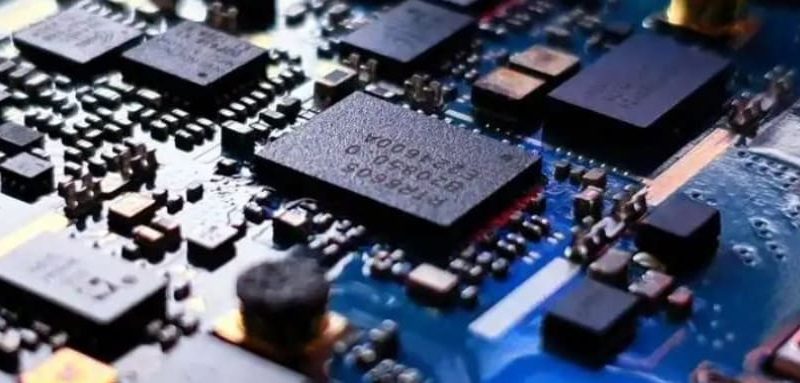
Turning a PCB design into a working electronic product takes more than producing bare boards. It requires a controlled manufacturing and assembly workflow that moves from design review to fabrication, component sourcing, placement, soldering, inspection, and final delivery. Most delays and quality issues I’ve seen on the production floor trace back to one thing: a gap between the bare board stage and the assembly stage that nobody owned. When fabrication, sourcing, and assembly are treated as separate errands instead of one connected process, small problems become expensive ones.
This guide explains what happens during PCB assembly, how it differs from PCB manufacturing, when to choose manufacturing-only versus full assembly, and what to prepare before requesting a quote.
What Happens During PCB Assembly?
PCB assembly is the stage where electronic components are mounted and soldered onto printed circuit boards so the board can perform its intended function. A bare PCB has copper traces, pads, solder mask, and silkscreen — but it does not become a usable circuit until components like resistors, ICs, connectors, capacitors, sensors, and modules are installed.
The right assembly route depends on the PCB design, component package types, production volume, testing needs, and whether you need bare-board manufacturing only or a complete turnkey service.
PCB Manufacturing vs PCB Assembly: What’s the Difference?
These two terms get used interchangeably, but they describe different stages.
PCB manufacturing is the process of making the bare board itself. This is where electrical paths, board layers, holes, surface finish, solder mask, and legend are created from the design files. The output is a physical board ready to accept components — but it is not yet a complete electronic assembly.
PCB assembly is the process of mounting and soldering components onto that bare board. The output is a finished PCBA that can be integrated into a product.
Why the distinction matters: Each stage solves a different problem. Manufacturing creates the platform. Assembly turns that platform into a working unit. When the two are handled by separate vendors with no coordination, the buyer ends up managing design questions, fabrication tolerances, component availability, soldering requirements, and testing details across multiple parties. That’s where handoff gaps appear.
From Design Files to Finished Circuit Board Assembly
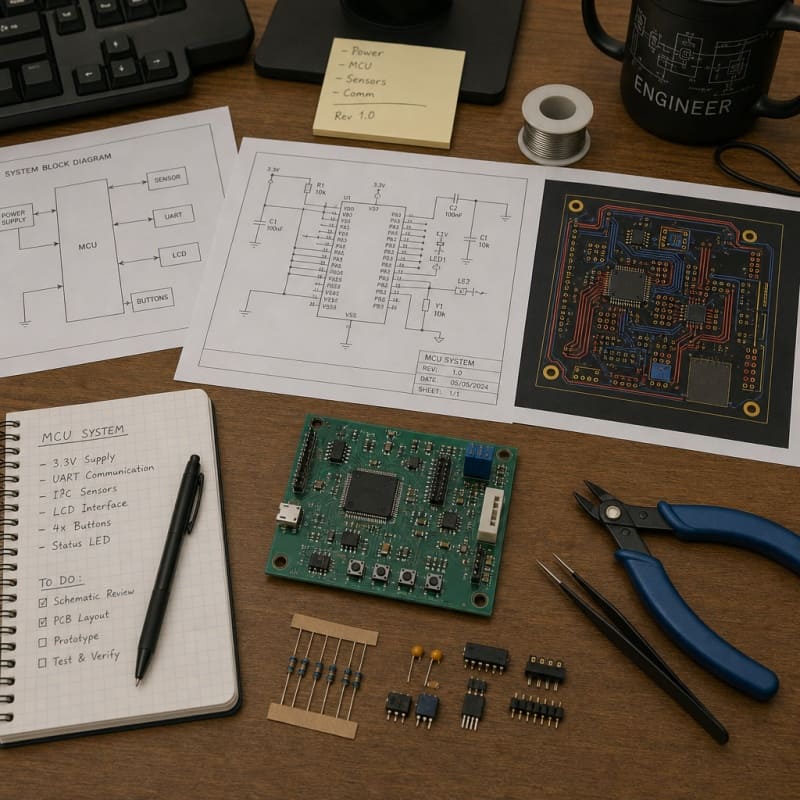
A clear process reduces surprises. Before assembly begins, the supplier needs enough production data to understand the board, source compatible components, build the assembly plan, and verify that the finished PCBA matches the design intent.
A typical PCB assembly workflow includes:
- File review and preparation — Gerber files, drill files, BOM, pick-and-place data, assembly drawings, and notes are checked for completeness.
- DFM and DFA feedback — The board is reviewed for manufacturability and assembly practicality, such as pad spacing, component orientation, and soldering access.
- Bare-board manufacturing — Printed circuit boards are fabricated according to the approved design data.
- Component sourcing or kitting — Components are purchased by the supplier, provided by the customer, or handled through a mixed approach.
- Solder paste application — A stencil applies solder paste to SMT pads in the correct locations and volume.
- Component placement — Automated placement equipment positions surface-mount components according to the pick-and-place file.
- Reflow and soldering — SMT components are soldered in a controlled thermal process. Through-hole components may require wave, selective, or manual soldering.
- Inspection and testing — Visual checks, AOI, functional testing, or other agreed inspection steps confirm the assembly is built correctly.
- Packing and delivery — Finished PCBAs are packed for handling, integration, or the next stage of production.
This sequence can be adapted for prototypes, small-batch builds, and larger production runs. The important point: each step affects the next one. A design decision made early — component spacing, connector orientation — can influence stencil design, assembly yield, inspection access, and rework difficulty later.
Why Turnkey Support Simplifies the PCBA Journey
Turnkey PCB assembly means one provider manages more of the process: bare-board fabrication, component sourcing, assembly, and agreed inspection or testing. Instead of sending the PCB to one vendor, purchasing components separately, then coordinating assembly with another team, turnkey service creates a more connected path from files to finished boards.
The main benefit is coordination. If a component is unavailable, the substitution can be checked against the BOM, footprint, and assembly requirements before the build moves forward. If the board layout creates a potential assembly issue, it can be flagged before boards are fabricated. If testing requirements are known early, the assembly plan can leave room for access points, fixtures, or handling steps.
Turnkey support is especially useful when you need:
- Prototype PCBAs that must be built quickly enough for design validation
- Small-batch production where ordering and tracking parts manually takes too much time
- Mixed-technology boards using both SMT and through-hole components
- Complex BOM handling with many line items, alternates, or package variations
- A single point of communication for manufacturing and assembly questions
- Cleaner project tracking from design review through delivery
The value is not just placing parts on boards. It is helping the customer understand what is needed, what may need clarification, and what service model fits the project.
Manufacturing-Only vs Full Assembly: Which Fits Your Project?
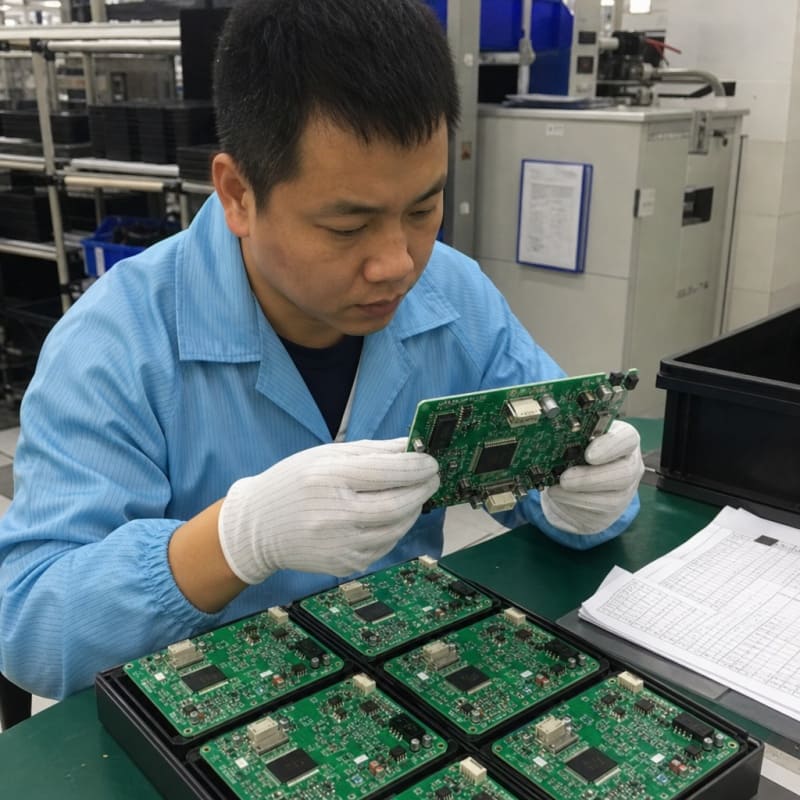
This comes down to control, responsibility, timing, and risk. If your team already owns the component supply chain and has internal assembly resources, manufacturing-only may be efficient. If your team wants a finished PCBA and prefers to reduce coordination work, full assembly is usually the more practical route.
| Project situation | Manufacturing-only | Full assembly |
|---|---|---|
| You only need bare printed circuit boards | Yes | Not necessary unless assembly follows soon |
| You already have approved components in stock | Possibly | Yes, if you want the supplier to assemble customer-supplied kits |
| You want one vendor to manage both manufacturing and assembly | No | Yes |
| Your BOM may need sourcing support | Limited | Stronger fit |
| Your design is still being validated | Possible | Often useful when assembly feedback is needed |
| You need finished boards for product integration | No | Yes |
The best choice is not always the most complete service. It is the service that matches your team’s workload and confidence level. A mature engineering team may separate fabrication and assembly for specific reasons. A startup or product team may prefer turnkey support because it reduces the number of moving parts.
A Better Assembly Outcome Starts with Better Preparation
Even a capable assembly provider depends on clear inputs. Before requesting a quote or starting production, gather the files and decisions that define how the PCBA should be built. This preparation makes the conversation faster and helps avoid assumptions.
Prepare these items before you begin:
- Gerber and drill files for board fabrication
- Bill of materials with manufacturer part numbers where available
- Pick-and-place file showing component coordinates and rotation
- Assembly drawings or notes for polarity, special handling, connectors, or mechanical constraints
- Testing expectations such as visual inspection, electrical checks, or functional test requirements
- Quantity and delivery goals so the service level can match the project stage
- Component sourcing preference: turnkey sourcing, customer-supplied parts, or a combination
A realistic example: if you are building a connected sensor board, your files may show the PCB outline and copper layers, but the assembly team still needs to know the exact IC packages, antenna-related placement constraints, connector direction, and whether the finished board needs a power-on test. The more of this you provide upfront, the easier it is to plan the assembly flow and reduce back-and-forth.
Move from Files to Finished PCBAs with Confidence
The PCB assembly process is easiest to manage when manufacturing and assembly are treated as connected parts of the same production journey. Bare-board fabrication creates the foundation. Assembly adds the components, soldering, inspection, and practical readiness needed for the board to function in a product.
If you are comparing PCB manufacturing, circuit board assembly, or complete turnkey PCB assembly, start with your files, your sourcing preference, and your end goal. Greenspcba Technology can help you review what is needed and choose a path that fits your prototype, small-batch, or production requirements.
Ready to plan your next PCBA build? Share your PCB design files, BOM, quantity, and assembly expectations to request a quote or discuss the best service route for your project.
Recent Comments