
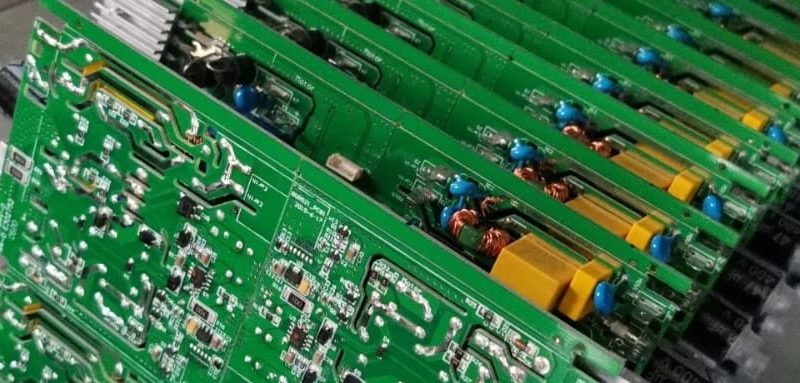
There’s a stage in PCBA production that rarely gets much attention: the waiting period. Boards sit between processes, sometimes for a few hours, sometimes for weeks. That gap matters more than most people realize. I’ve seen boards that passed every test come back with oxidized pads or intermittent faults simply because they were stored the wrong way. This guide walks through what actually works at each stage.
Why Storage Conditions Matter More Than You Think
Storing a PCBA isn’t like putting a spare part in a drawer. The board is a working assembly with exposed metal, sensitive components, and solder joints that will need to survive the next process step. Humidity, dust, static, and temperature swings all leave their mark.
Here’s what goes wrong when storage is careless:
- Pads oxidize and solder won’t wet properly
- Components absorb moisture and crack during reflow
- Exposed copper starts corroding
- Static discharge damages parts that passed incoming inspection
- Boards fail weeks later in the field, and nobody traces it back to storage
For boards headed into medical electronics or automotive systems, these issues aren’t just costly. They can trigger recalls.
Stage 1: Right After SMT Assembly
Once SMT is done, boards usually sit in the DIP or assembly area for one to three days before the next step. For most standard boards, this is manageable with basic controls:
- Temperature around 22–30°C
- Humidity between 30–60% RH
- Storage on anti-static racks, not stacked loose
But OSP-finished boards are a different story. OSP is a thin organic coating that protects the copper until soldering. Once it’s exposed to air, it starts breaking down. These boards need:
- A temperature and humidity controlled cabinet
- Soldering within 24 hours if possible
- No direct airflow, dust, or sunlight
If an OSP board has to wait longer, you’re rolling the dice on solderability. Some shops use nitrogen cabinets to buy extra time, but it’s better to just keep the clock short.
Stage 2: After Testing, Before Final Assembly
This is where boards often sit the longest. Testing is done, but the final product isn’t ready. For storage that lasts more than a few days, a few simple steps go a long way:
- Apply conformal coating if the design allows it
- Vacuum-pack the board with desiccant
- Keep temperature at 22–28°C
- Keep humidity at 30–60% RH
Conformal coating seals the surface against moisture and dust. Vacuum packaging with desiccant keeps humidity from creeping in during transport or long-term storage. For medical and automotive customers, this step is often written into the contract, not optional.
Stage 3: Before Final Product Assembly
If boards are waiting on other components or a production slot, store them in ESD-safe bags or trays. Don’t stack bare boards on top of each other without protection. Label each bag clearly with:
- Part number
- Revision
- Date of manufacture
- Storage expiry date if one applies
This traceability isn’t just paperwork. For regulated industries, it’s the difference between a smooth audit and a difficult one.
What Determines PCBA Shelf Life
PCBA shelf life isn’t a fixed number. It ranges somewhere between two and ten years depending on how the board was built and how it’s kept.
Storage Environment
Damp, dusty rooms shorten shelf life fast. The target is a stable environment around 25°C, low humidity, and no dust. Fluctuations are worse than a slightly higher but steady temperature.
Component Reliability
Different components age differently. Moisture sensitivity level (MSL) matters here. Parts rated MSL 3 or higher may need baking before reflow if they’ve been stored too long.
PCB Material and Surface Finish
The board substrate itself holds up well. The surface finish is the weak point:
- OSP: Shortest shelf life, oxidizes quickly
- HASL: Long shelf life, not ideal for fine-pitch work
- ENIG: Good balance of shelf life and flat surface
- Immersion Silver/Tin: Moderate shelf life, sensitive to sulfur and humidity
Pick the finish that matches your production timeline, then store it accordingly.
Operating Load After Assembly
High-frequency, high-load operation stresses traces and components continuously. Heat accelerates oxidation, which can eventually cause shorts or opens. Thermal design and derating aren’t just performance choices. They affect how long the assembly lasts.
Recommended Storage Conditions at a Glance
| Stage | Temperature | Humidity | Storage Method |
|---|---|---|---|
| After SMT (standard) | 22–30°C | 30–60% RH | Anti-static rack |
| After SMT (OSP) | Controlled cabinet | Strict control | Sealed cabinet, solder within 24h |
| After testing (long-term) | 22–28°C | 30–60% RH | Conformal coating + vacuum pack |
| Before final assembly | 22–28°C | 30–60% RH | ESD bag + desiccant |
Practical Habits That Actually Help
A few habits make a real difference in day-to-day storage:
- Use ESD-safe racks, bags, and trays consistently, not just when someone’s watching
- Keep boards out of sunlight and away from dust sources
- Label every bag with part number, revision, and date
- Add desiccant and a humidity indicator card to sealed bags
- Bake moisture-sensitive components before reflow when needed
- Rotate stock using FIFO so older boards move first
- Inspect stored boards for oxidation before assembly, not after
None of these are complicated. The problem is that they get skipped when production is busy, and that’s exactly when the damage happens.
How Greenspcba Technology Handles Storage
At Greenspcba Technology, storage is treated as part of the quality control process, not an afterthought. We use ESD-safe storage, humidity-controlled cabinets for OSP boards, and vacuum packaging with desiccant for longer storage. For medical and automotive projects, we follow customer-specific storage and traceability requirements.
If you’re looking for a PCBA partner who manages storage, testing, and assembly under one roof, upload your BOM and Gerber files for a 24-hour quote.
FAQ
What temperature and humidity should PCBA be stored at?
Aim for 22–28°C and 30–60% RH. OSP boards need tighter control and should be soldered within 24 hours.
How long can PCBA boards be stored?
It depends on the surface finish, components, and storage conditions. Two to ten years is a reasonable range. OSP boards have the shortest shelf life.
Why do OSP boards need special storage?
OSP is an organic coating that oxidizes quickly in air and humidity. A controlled cabinet and a 24-hour soldering window protect solderability.
Should PCBA boards be vacuum-packed?
Yes, for long-term storage or transport. Vacuum packing with desiccant keeps moisture out and slows oxidation.
Does Greenspcba Technology offer conformal coating and vacuum packaging?
Yes. We provide conformal coating, vacuum packaging, and controlled storage as part of our turnkey PCBA services.
Need reliable PCBA manufacturing with controlled storage and quality processes?
Greenspcba Technology supports SMT, testing, conformal coating, and long-term storage for medical, automotive, and industrial electronics. Send your BOM for a 24-hour quote.
Recent Comments