
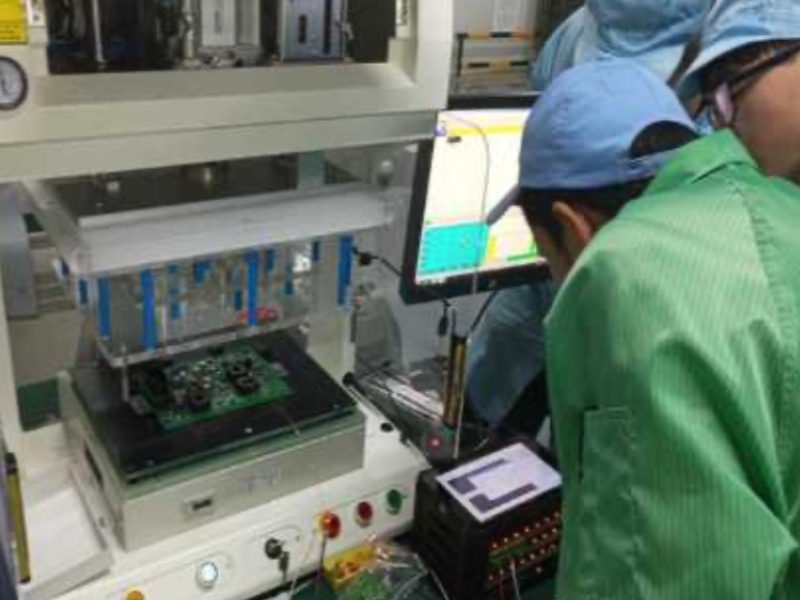
An ICT tester plays a critical role in finding manufacturing defects before a populated circuit board moves deeper into production. Greenspcba Technology helps electronics teams, and aspiring test engineers understand the practical skills behind reliable in circuit test work, from fixture readiness to test automation, system testing, quality assurance, and clear defect reporting.
If your team is building, validating, or outsourcing electronics production, use this as a skills checklist for supplier conversations, or planning a stronger PCB test strategy.
What skills does an ICT tester need?
An ICT tester needs a mix of electronics knowledge, production awareness, fixture handling, measurement discipline, troubleshooting ability, and communication skills. The role is not only about pressing “start” on a machine; it is about understanding why a pcb in circuit test passed, failed, or produced an unclear result. A capable ict tester can work with engineers, operators, quality assurance teams, turnkey PCB assembly manufacturer, and sometimes in circuit tester manufacturers to keep testing accurate and production moving.
The strongest testers understand both the board and the process around it. They can read documentation, follow test management procedures, spot repeat failures, protect hardware from damage, and escalate issues with enough detail for fast action. That combination is what turns in circuit test from a checkpoint into a reliable production safeguard.
Build test confidence before boards leave production
In circuit test is often used to verify component placement, solder integrity, opens, shorts, resistance, capacitance, diode orientation, and other measurable conditions on an assembled PCB. For many electronics manufacturers, it sits between PCB assembly and later functional or system testing, helping catch defects while they are still practical to diagnose.
A skilled ICT tester helps reduce uncertainty at this stage. Instead of treating a fail result as a simple reject, they look for context: Is the failure isolated or recurring? Is the in circuit test fixture seated correctly? Has the board variant changed? Is the test program aligned with the current revision? These questions prevent avoidable scrap, repeated retesting, and confusion between actual defects and process-related false failures.
This is especially useful when working with external partners such as turnkey PCB assembly manufacturer or a PCB design service. The better the test feedback, the easier it is for design, manufacturing, and quality teams to identify whether the issue is related to layout, component selection, assembly, fixture access, or test limits.
Core technical skills for practical ICT work
An ICT environment rewards detail. Testers do not need to replace design engineers, but they do need enough technical understanding to notice when a result does not match the board, documentation, or production reality.
Key technical skills include:
- PCB literacy: Reading assembly drawings, board revisions, reference designators, polarity markings, and basic schematics so failures can be linked to real circuit locations.
- Component awareness: Recognizing common passive, active, and electromechanical components, including how wrong values, missing parts, reversed parts, or poor solder joints may appear in test results.
- Fixture handling: Loading boards correctly, checking alignment, protecting probes, and identifying mechanical problems with an in circuit test fixture before they affect results.
- Measurement discipline: Understanding resistance, continuity, capacitance, diode checks, shorts, opens, and tolerance ranges well enough to question suspicious readings.
- ESD and handling control: Following safe handling practices so the test process does not introduce damage after assembly.
- Documentation habits: Recording failure codes, board IDs, lot details, fixture IDs, test program versions, and observed conditions with consistency.
These skills make an ICT tester more than an operator. They allow the tester to serve as a practical link between the production floor and the engineering team.
Fixture awareness protects accuracy and throughput
The in circuit test fixture is where many avoidable problems begin. Worn probes, misalignment, debris, damaged pins, unstable board support, and poor contact can all create misleading failures. A good tester learns to recognize when the fixture may be contributing to inconsistent results instead of assuming every fail is a board defect.
Routine fixture awareness includes checking for bent or missing probes, confirming the board sits flat, verifying clamps or vacuum systems operate as expected, and watching for repeated failures at the same access points. When the same node fails across multiple boards, the tester should know how to pause, inspect, and escalate rather than pushing more units through an unreliable setup.
When teams work with in circuit tester manufacturers, the tester’s real-world observations are valuable. Clear notes about contact issues, access challenges, or repeat fixture-related symptoms can help improve maintenance schedules, fixture revisions, and future test coverage decisions.
Test automation skills make results faster and more repeatable
Test automation is increasingly important in electronics production because it reduces manual variation and helps teams collect consistent data. For an ICT tester, automation skills do not always mean writing complex software. They may include understanding test sequences, recognizing script or program version mismatches, following controlled change procedures, and knowing when an automated result needs human review.
An ICT tester who understands automation can support smoother production by:
- Confirming the correct test program is loaded for the board revision.
- Checking that barcode scans, serial numbers, or work-order data are captured correctly.
- Watching for abnormal cycle interruptions, communication errors, or repeated retest loops.
- Separating operator setup issues from board-level failures.
- Reporting automation problems in terms that a test engineer can reproduce.
This skill overlaps with, but is not identical to, the work of a software tester. A software tester may focus on application behavior, user flows, or code defects. An ICT tester focuses on the interaction between hardware, fixture, test program, production data, and measurable electrical conditions. Both roles benefit from structured thinking, but the physical board adds another layer of complexity.
Quality assurance depends on disciplined test management
Quality assurance is strongest when test results are traceable, repeatable, and reviewed with a consistent process. That is where test management becomes essential. Without disciplined test management, teams may struggle to know which board was tested, which revision was used, what limits applied, whether a fail was confirmed, or whether a retest was justified.
A reliable ICT tester supports test management by following defined procedures and keeping records clean. This includes using approved programs, avoiding undocumented overrides, applying retest rules consistently, and escalating unusual patterns quickly. Good data is not paperwork for its own sake; it helps production teams detect trends before defects become larger problems.
For example, one failed capacitor location may indicate a single assembly defect. The same failure appearing repeatedly across a batch may point to feeder setup, component value mix-up, soldering conditions, design access limitations, or an issue with the in circuit test fixture. The tester’s ability to document that pattern is often what makes root-cause analysis possible.
System testing and ICT work better together
In circuit test and system testing answer different questions. ICT is generally focused on board-level electrical checks and manufacturing defects. System testing looks at how the assembled product, subsystem, or board behaves under more complete operating conditions.
A skilled ICT tester understands this difference and does not treat either stage as a substitute for the other. A board may pass ICT but still fail system testing due to firmware, calibration, connector interaction, thermal behavior, or higher-level functional issues. A board may also fail ICT for a reason that prevents later testing from being meaningful.
This perspective helps teams build a more complete validation flow. ICT catches many production-level issues early, while system testing provides confidence that the product performs as intended in a broader context. When failures are communicated clearly between both stages, engineering and manufacturing teams can resolve problems faster.
The best ICT testers combine precision with communication
Technical skill matters, but communication often determines how quickly defects are resolved. A vague note such as “board failed” gives the next person very little to act on. A useful note identifies the board, test step, failure symptom, fixture or program context, and any visible condition observed during handling.
Strong ICT communication includes:
- Writing concise failure notes that a test engineer can investigate.
- Using consistent terminology for defects, retests, fixture concerns, and process deviations.
- Asking for clarification when documentation does not match the board.
- Reporting repeated failures before they consume unnecessary production time.
- Explaining practical floor observations without overstating the cause.
- Supporting feedback loops with design, manufacturing, and quality assurance teams.
This is where experienced testers add real value. They avoid guessing beyond the evidence, but they also do not stay silent when the pattern suggests something bigger than an isolated failure.
Use this skills checklist to evaluate readiness
Whether you are hiring an ICT tester, training an operator, or strengthening a test process with a PCB design service or assembly partner, a practical checklist keeps expectations clear. It also helps separate basic machine operation from true test capability.
An ICT tester is ready for more responsibility when they can:
- Load, align, and unload boards without damaging assemblies or fixture probes.
- Confirm board revision, work order, and test program before running production tests.
- Understand common in circuit test failure types and what they may indicate.
- Recognize when a fixture issue may be producing false or inconsistent results.
- Follow test management rules for retest, quarantine, escalation, and documentation.
- Communicate effectively with a test engineer, quality assurance lead, or production supervisor.
- Distinguish ICT findings from issues that belong in functional or system testing.
- Support test automation routines while spotting abnormal data capture or process flow problems.
- Maintain clean records that help trace boards, lots, programs, and recurring defects.
The goal is not perfection on day one. The goal is a tester who works carefully, learns the product, respects the process, and improves the reliability of every test result.
Strengthen your ICT process from design to production
A capable ICT tester can only be effective when the surrounding process supports them. Test access should be considered during design, fixture requirements should be clear, assembly partners should understand the expected coverage, and failure data should flow back into quality and engineering decisions. This is why ICT planning often involves more than the tester alone.
If you are preparing a new board for production, reviewing an existing in circuit test process, or comparing support from turnkey PCB assembly manufacturers, start by defining what you expect ICT to prove. Then make sure the people, fixture, test program, documentation, and escalation path all support that goal.
When you are ready to improve test coverage, clarify tester responsibilities, or connect PCB design, assembly, and quality assurance into one stronger workflow, you can contact Greenspcba Technology and turn these skills into a documented test plan.
Recent Comments