
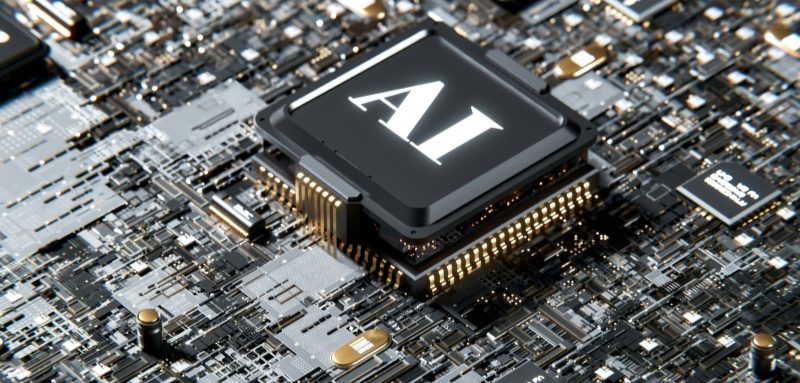
Rigid Printed Circuit Boards (PCBs) serve as the fundamental mechanical support and electrical interconnection backbone for the vast majority of electronic devices. The manufacturing process involves multiple engineering disciplines, including photochemical imaging, multilayer lamination, precision drilling, electrochemical deposition, automated optical inspection, and electrical testing. This article provides a systematic, rigorous technical overview of the complete rigid PCB manufacturing and assembly workflow, from front-end engineering to final outbound inspection, in compliance with IPC-6012 (Qualification and Performance Specification for Rigid Printed Boards) and industry-standard process capabilities.
1. PCB Types and Front-End Engineering
1.1 Classification of Rigid PCBs
Rigid PCBs are classified by the number of conductive layers into three primary categories:
| Type | Layer Count | Typical Applications | Key Characteristics |
|---|---|---|---|
| Single-Sided | 1 | Remote controls, power adapters, calculators | Conductive pattern on one side only |
| Double-Sided | 2 | Home appliances, industrial control boards | Conductive patterns on both sides; interconnected via plated through-holes (PTH) |
| Multilayer | ≥4 | Smartphones, automotive electronics, telecom infrastructure | Contains inner layers; requires lamination process |
1.2 Front-End Engineering
Front-end engineering is the quality gateway of PCB manufacturing. It encompasses the following critical activities:
- Design for Manufacturing (DFM) Review: Verification of trace width/spacing, aspect ratio (board thickness to hole diameter), annular ring width, and compatibility with the fabricator’s process capabilities.
- Stack-Up Confirmation: Definition of copper weights, dielectric thicknesses, and impedance control requirements for each layer.
- Panelization Design: Optimization of panel utilization while accommodating SMT assembly efficiency.
- Material Selection: Determination of substrate material based on parameters such as glass transition temperature (Tg), coefficient of thermal expansion (CTE), dielectric constant (Dk), and dissipation factor (Df).
Industry experience indicates that rigorous front-end engineering can reduce production defects by 30% to 50%.
2. Materials and Production Tooling
2.1 Common Substrate Materials and Performance Specifications
| Material Type | Typical Grade | Tg (℃) | Key Features | Primary Applications |
|---|---|---|---|---|
| Standard FR-4 | IPC-4101C | 130–140 | Cost-effective, general-purpose | Consumer electronics |
| High-Tg FR-4 | IT-180A | ≥170 | Enhanced thermal reliability | Automotive, industrial control |
| Halogen-Free | EM-825 | 150 | Environmentally compliant (RoHS/REACH) | Export-oriented products |
| High-Frequency | Rogers 4003 | 280 | Low loss, stable Dk | RF/microwave circuits |
2.2 Production Tooling
Production tooling ensures consistency in volume manufacturing and includes:
- Drill Files: Guide CNC drilling machines for through-hole and blind hole processing.
- Routing Files: Define PCB final outline and unconventional slots.
- Test Point Files: Used for fabrication of electrical test fixtures.
- AOI Reference Data: Gerber-based benchmark files for automated optical inspection.
3. Phototools and Data Files
3.1 Phototools
Phototools are high-precision black-and-white films (or LDI data) used for inner and outer layer pattern transfer. Key specifications:
- Resolution: ≥ 4000 DPI
- Dimensional Accuracy: ±0.02 mm
- Registration Error: ≤ 0.025 mm
3.2 Critical Data File Types
| File Type | Format Example | Purpose |
|---|---|---|
| Gerber | RS-274X | Conductor, soldermask, legend patterns |
| Drill File | Excellon | Hole sizes and coordinates |
| Routing File | DXF / Gerber | Board outline and slots |
| ODB++ | Archive | Integrated engineering data |
4. Multilayer Board Fabrication Process
4.1 Inner Layer Imaging
The inner layer circuit pattern is transferred onto the copper foil using a photosensitive dry film (typical thickness: 25–50 μm) followed by UV exposure. Registration accuracy requirement: ≤ 0.05 mm.
4.2 Develop/Etch/Strip (DES) Process
- Development: Removal of unexposed dry film to expose copper areas designated for etching.
- Etching: Removal of excess copper using acidic or alkaline etchants; trace width control within ±10%.
- Stripping: Removal of remaining dry film to reveal the complete inner layer circuit.
4.3 Automated Optical Inspection (AOI)
AOI detects inner layer defects including opens, shorts, notches, and protrusions. Coverage shall be 100%, with typical detection resolution of 15–25 μm.
4.4 Lamination
Inner layer cores and prepreg (PP) sheets are alternately stacked and laminated under elevated temperature (180–200°C) and pressure (300–400 PSI) to form a multilayer structure. Critical control parameters include:
- Lamination temperature profile
- Resin flow characteristics
- Layer-to-layer registration (≤ 0.075 mm)
5. Drilling and Hole Metallization
5.1 Drilling
CNC drilling machines are employed with drill bit diameters typically ranging from 0.15 mm to 6.5 mm. The maximum achievable aspect ratio (board thickness / hole diameter) can reach 15:1. Key specifications:
- Hole Position Accuracy: ±0.05 mm
- Hole Wall Roughness: ≤ 25 μm
- Nail Head Control: ≤ 1.5 μm
5.2 Hole Metallization
Hole wall conductivity is achieved through electroless copper deposition followed by panel electroplating:
- Electroless Copper Deposition: Deposits 0.5–1.5 μm of conductive copper on the hole walls.
- Panel Electroplating: Thickens the copper layer to 15–25 μm, ensuring reliable electrical interconnection.
6. Outer Layer Processing and Plating
6.1 Outer Layer Imaging
A second pattern transfer step defines the outer layer circuits and pad geometries. Registration accuracy requirement: ≤ 0.05 mm.
6.2 Tin Plating
Tin is plated (5–10 μm thickness) onto the copper traces to be preserved, serving as an etch resist.
6.3 Etch and Tin Strip
- Etching: Removal of unprotected copper not covered by the tin resist.
- Tin Strip: Removal of the tin protection layer using nitric acid or a proprietary stripping solution, exposing the underlying copper circuit.
7. Soldermask and Legend
7.1 Soldermask
Soldermask covers all areas except pads and test points, preventing shorts, oxidation, and solder bridging. Common colors and characteristics:
| Color | Characteristics | Typical Applications |
|---|---|---|
| Green | Standard process, lowest cost | General-purpose products |
| Black/Blue/Red | Aesthetic differentiation | Consumer electronics |
| White | High reflectivity | LED lighting |
Performance requirements (per IPC-SM-840):
- Adhesion (Cross-Cut Test): ≥ 4B
- Insulation Resistance: ≥ 10¹² Ω
- Heat Resistance (288°C Float Solder): ≥ 10 seconds
7.2 Legend
White epoxy ink is applied via screen printing or inkjet printing to mark component designators (R1, C2, U1), polarity indicators, revision numbers, and ESD symbols. Minimum legend height: typically ≥ 0.8 mm.
8. Outline Routing and Final Inspection
8.1 Outline Routing
CNC routing machines cut the final PCB outline, supporting:
- Unconventional slots (slot width ≥ 0.8 mm)
- Chamfering (30°/45°/60°)
- V-CUT (remaining thickness: 1/3 of board thickness ±0.1 mm)
- Gold finger beveling
Dimensional tolerance: ±0.1 mm (standard), ±0.05 mm (precision).
8.2 Electrical Testing
Electrical test methods include:
- Flying Probe Testing: Suitable for small volumes and diverse product types; no fixture required.
- Fixture Testing: Suitable for high volumes; lower per-unit cost at scale.
Test parameters:
- Open/Short Detection
- Insulation Resistance (≥ 10 MΩ)
- Conductive Resistance (≤ 10 Ω)
8.3 Final Inspection
Final inspection is performed in accordance with IPC-A-600 (Acceptability of Printed Boards) and includes:
- Visual Inspection (scratches, exposed copper, soldermask bubbles)
- Dimensional Measurement (outline, hole size, registration deviation)
- Reliability Sampling (solderability, thermal stress, ionic contamination level)
9. How to Initiate a Rigid PCB Project
| Step | Key Inputs | Outputs |
|---|---|---|
| 1. Submit Design Files | Gerber / ODB++ / Drill Files | Engineering pre-review report |
| 2. Process Capability Match | Trace width/spacing, aspect ratio, material requirements | DFM confirmation |
| 3. Obtain Quotation and Lead Time | Quantity, delivery requirement, special process needs | Quotation + Purchase Order Confirmation |
| 4. Engineering Confirmation & Sample Validation | Engineering Question (EQ) responses | Sample acceptance report |
| 5. Volume Production & Shipment | Production authorization | Shipment report + Certificate of Conformance (COC) |
Recommendation: First-time customers are strongly advised to complete sample validation before transitioning to volume production to mitigate batch risks.
10. Common Issues and Quality Control Metrics
| Defect Category | Typical Defect | Preventive Action | Detection Method |
|---|---|---|---|
| Conductor Defects | Open / Short | Optimize exposure parameters | AOI + Electrical Test |
| Hole Quality | Barrel Crack | Control electroless/plating uniformity | Microsection Analysis |
| Soldermask Defects | Plugged Hole / Peeling | Control ink thickness and exposure energy | Microscope Inspection |
| Dimensional Deviation | Outline Out of Tolerance | Regular CNC router bit calibration | 2D Measurement System |
11. Conclusion
Rigid PCB manufacturing is a highly and process-intensive engineering endeavor. Each process step — from front-end engineering to final electrical testing — can influence the electrical performance and long-term reliability of the final product. Whether you are a hardware engineer, procurement professional, or project manager, a systematic understanding of the above manufacturing processes enables more effective control over product quality, cost, and delivery schedules.
For organizations seeking a rigid PCB manufacturing and assembly partner with high reliability, rapid prototyping, and stable volume production capabilities, please contact our engineering team for professional support.